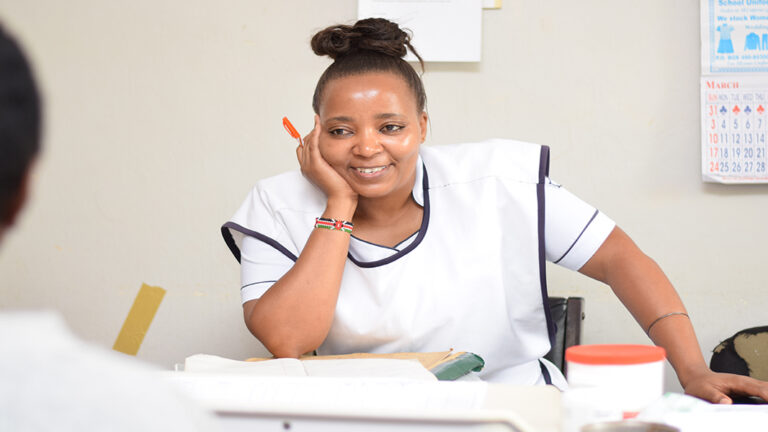
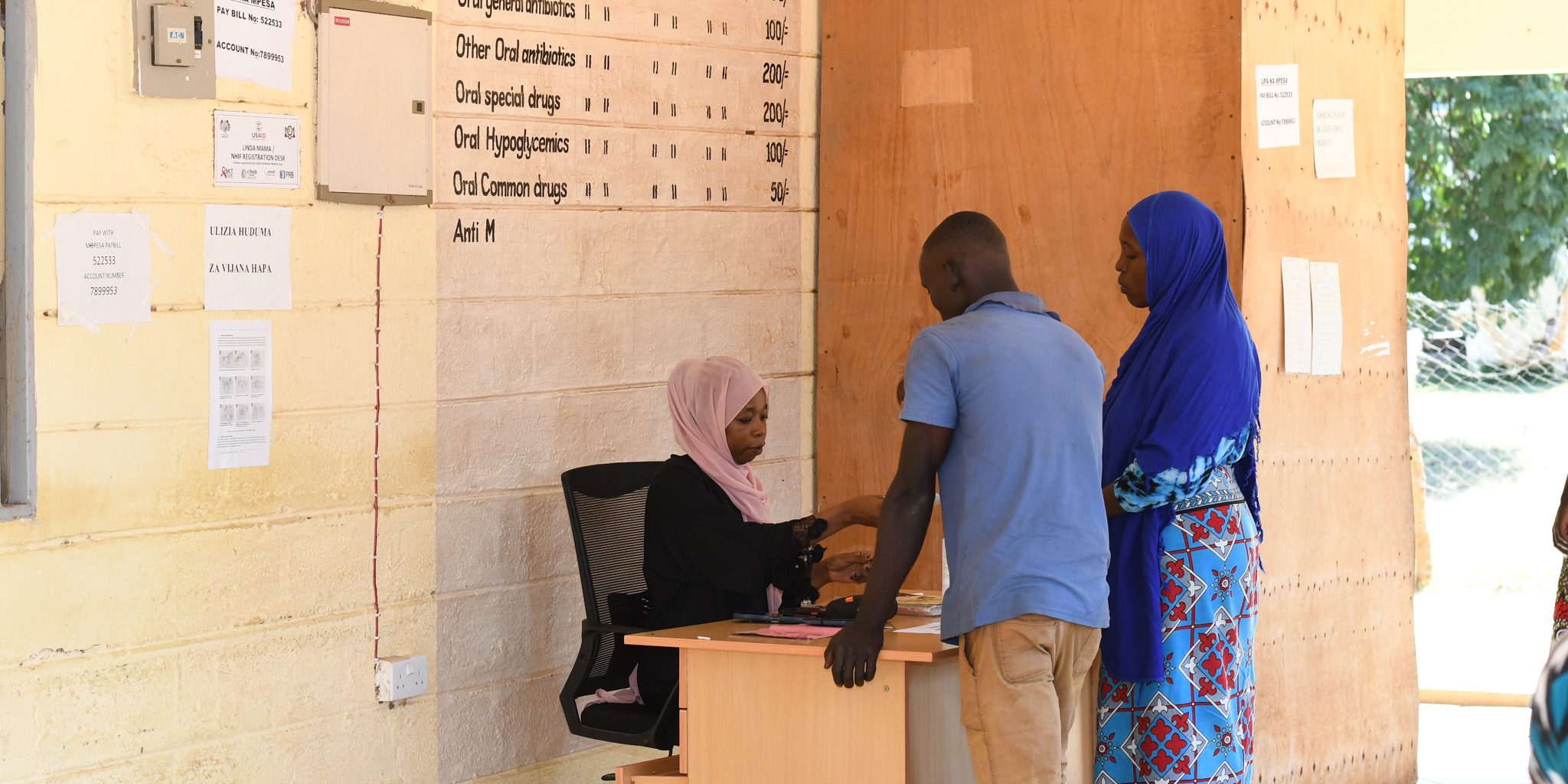
The Kenyan health care system is faced with several core challenges that affect the provision of quality health services. These include a persistent shortage of health workers, particularly specialists, and delays in salary payments, which directly impact the quality and accessibility of healthcare services. To address these challenges, reforms should focus on strengthening Own Source Revenue (OSR) performance so that resources are available for timely salary payments, alongside well-designed incentives packages to attract and retain health workers in underserved areas.
According to the 2023 Health Labour Market Analysis, human resources for health have doubled over a decade from 77,417 in 2010 to 162,233 in 2020, an average increase of 11% per annum. However, even with this expansion in headcount, Kenya continues to face substantial health workforce gaps: the current stock of health workers meets only 76.4 percent of the estimated need and, in the absence of decisive reforms, this coverage is projected to fall to around 60 percent by 2035.[1] This widening deficit reflects rising health needs driven by population growth and an increasing burden of disease. The challenge is not only one of insufficient numbers but also of inequitable distribution, with health workers concentrated in better-off areas. Marginalized counties, in particular, struggle to offer competitive incentives to attract and retain qualified health professionals, even in the context of devolution.[2]
To address these challenges, several strategies can be implemented:
Increasing human resource allocations within counties by raising the equitable share
Counties depend heavily on the equitable share as their main source of revenue for financing devolved functions. Healthcare absorbs roughly 24 percent of county budgets and allocations to health have increased substantially since devolution.[3] Within the county health budget, recurrent spending accounts for 86 per cent of health expenditure, including compensation of employees at 64 per cent, rising over time.[4] This means that when counties’ fiscal space expands, most additional health spending is absorbed through hiring and paying health workers. Thus, while the equitable share is formally unconditional, existing expenditure patterns make it highly likely that higher equitable share allocations would translate into increased county spending on HRH. However, expanding fiscal space alone is not sufficient to address maldistribution and shortages.
Target investment in the training of specialist and incentives to reduce disparities in the distribution of health professionals across counties
Kenya has a shortage of approximately 46 percent of nurses and 92 percent of doctors[5]. At the same time, specialists who are trained heavily concentrated in Nairobi City County yet most people live in rural areas.[6] This shortage constrains counties’ ability to provide essential specialized services, with adverse effects on health outcomes and overall system efficiency.
In many cases, the lack of specialists has led to inappropriate task shifting, where nurses and medical officers perform duties beyond their scope of training, compromising the quality and safety of care. While the overall health workforce numbers have grown, aggregate figures mask substantial shortages in key specialties and across county-level hospitals, where specialist capacity is most needed.
To reduce these imbalances, investment is required in comprehensive package of deployment and retention incentives (structured rural posting schemes, competitive hardship and retention allowances, improved working and living conditions in peripheral facilities, and clearly defined career progression pathways linked to service in rural areas) designed to redistribute specialist capacity towards marginalized counties. This creates a strong need for close coordination between counties and the national government to avoid competition among counties that will continue to disfavor more marginalized areas.
Ensuring timely and adequate compensation for healthcare workers is essential for maintaining motivation, job satisfaction, and retention within the health sector
Delays in salary payments have frequently contributed to low morale and disruptions in service delivery which undermine the efficiency of county health systems. While these delays are often experienced at the county level, they primarily stem from late disbursements by the National Treasury, which limit counties’ ability to meet payroll obligations on time. Counties cannot control the timing of national transfers but can partially cushion health workers by strengthening and better managing OSR.
Currently, OSR targets are often not met, and the actual revenue collected remains too small to meet overall financing needs. However, stronger and reliable OSR performance (automating revenue collection to close leakages, simplifying tax procedures through one stop shops and formalizing parts of the informal sector) can modestly expand the liquidity available to cushion these shocks.
Nakuru county has shown remarkable progress in revenue collection through automation, among other measures. Over the last two financial years, Nakuru general OSR excluding Facility Improvement Fund (FIF) increased from KSh.1.7 billion to KSh.1.85 billion, a 9 percent rise. This 9 percent increase in the non-earmarked (general) OSR is equivalent to about 53 percent of the monthly health wage bill. This increased performance shows that improving OSR generation can create a cushion to manage delays in intergovernmental transfers and protect critical spending such as the health wage bill.[7]
Closing Human Resources for Health (HRH) shortages requires a combination of mutually reinforcing measures. Counties need to strengthen OSR by automating revenue collection, giving them more predictable resources to support timely salary payments. At the same time, expanding fiscal space for HRH through increased equitable share allocations and deploying well-designed incentive packages for underserved areas such as rural hardship allowances, improved working conditions and clear career progression pathways, can move the system from merely recognizing shortages to systematically reducing them.
References:
[1] Health Labour Market Analysis for Kenya Link
[2] Health systems’ capacity in availability of human resource for health towards implementation of Universal Health Coverage in Kenya Link
[3] Making Devolution work for service delivery in Kenya Link
[4] Staying ahead of the curve: challenges and opportunities for future spending on health in Kenya Link
[5] Gender analysis of Kenya’s health sector Link
[6] Kenya health workforce report Link
This blog has been authored by Osborn Sifuna, Research Assistant at the Institute of Public Finance.