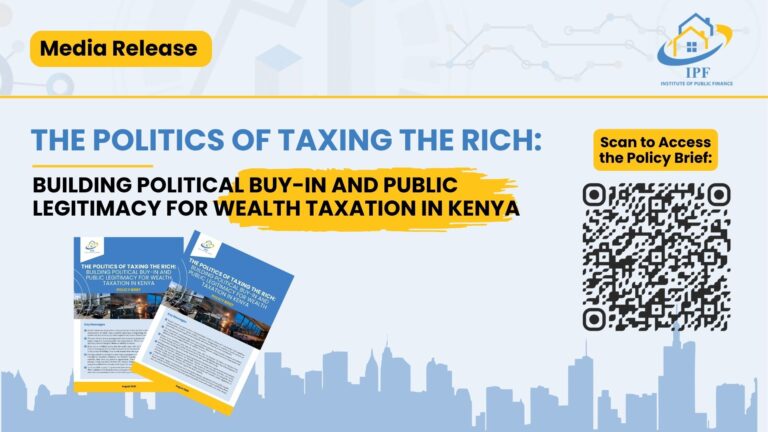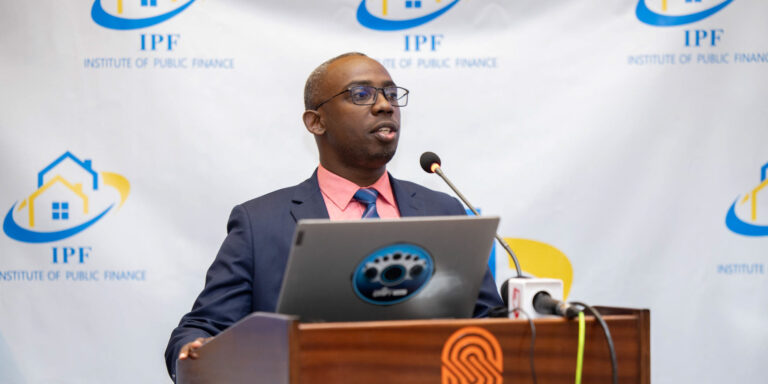

The Institute of Public Finance (IPF) has made a submission before the Finance Committee of Parliament on the Finance Bill 2026. We ask Parliament to prioritize fairness, reduce pressure on ordinary Kenyans, and ensure greater policy consistency, cautioning that without these changes, the Finance Bill 2026 could deepen inequality, raise prices, and weaken confidence in the tax system.
In our submission, we are asking Parliament to reduce the tax burden on salaried Kenyans, noting that the Finance Bill 2026 fails to address rising living costs and continues to overtax low-and middle-income earners. Despite prior government commitments, no reforms have been made to lower PAYE for workers earning below KSh 30,000 to 50,000, leaving households under growing financial pressure. Evidence shows that easing PAYE would boost disposable income, stimulate spending, and support the economy, and recommend compensating any revenue gap through more progressive taxes on wealth and high-value assets.
Our submission also raises concern that several proposals in the Bill could increase the cost of living and doing business. In particular, changes to Value Added Tax (VAT), especially shifting essential inputs in sectors like food production, healthcare, and clean energy from zero-rated to exempt are likely to raise production costs and consumer prices. We further warn that extending timelines for VAT refunds will strain businesses’ cash flows, potentially affecting jobs and investment. More broadly, IPF cautions that Kenya’s tax system remains unpredictable and inconsistent, with frequent policy changes undermining investor confidence and long-term planning. There is misalignment between the Finance Bill 2026 and Kenya’s Medium-Term Revenue Strategy, alongside unfulfilled promises to reform personal and corporate taxes.
Read the full IPF Finance Bill 2026 submission here.