Kenya has increasingly positioned voluntary carbon markets (VCMs) as an important source of climate finance for agriculture. The government has introduced reforms to strengthen carbon market governance, including amendments to the Climate Change Act and the establishment of a national carbon registry. At the same time, national leaders have projected an ambitious future in which carbon markets help mobilize significant resources for job creation and agricultural transformation. But how much finance are carbon markets currently generating, and can they realistically finance Kenya’s agricultural development needs?
IPF’s new paper on agriculture-related projects in Kenya suggests that carbon markets can mobilize meaningful supplementary finance for agriculture. However, they remain too small and too uncertain to serve as a primary source of agricultural financing. This is particularly so because VCMs largely generate financing for emissions reductions (mitigation), whereas much of what Kenya needs to invest in for agricultural resilience is climate adaptation.
Our analysis identified 46 agriculture-related carbon projects in Kenya on the two largest registries of such projects (Verra and Gold Standard). [LL1] Of these, 29 projects are currently registered or certified and are ‘able to issue’ carbon credits, while 17 remain in the pipeline. Projects currently ‘able to issue’ credits generate an estimated 5.2 million carbon credits annually. Depending on prevailing market prices, these projects could generate annual revenues ranging from approximately USD 27.2 million to USD 89.2 million. Pipeline projects could contribute an additional 8.3 million credits annually, with potential revenues ranging between USD 52.1 million and USD 157.2 million.
Taken together, Kenya’s current and pipeline agricultural carbon portfolio could generate between USD 79.3 million and USD 246.4 million annually. These figures demonstrate that carbon markets are no longer a niche source of climate finance. They have the potential to channel significant resources into activities such as agroforestry, rangeland restoration, soil carbon enhancement, and sustainable land management.
To give a sense of scale, the Ministry of Agriculture’s FY 2025/26 budget is approximately USD 369 million. Under conservative assumptions, revenues from projects currently ‘able to issue’ credits are equivalent to roughly 7% of this budget. If all pipeline projects become operational, total carbon revenues could reach the equivalent of about 22% of the ministry’s budget under lower-bound estimates and up to 67% under more optimistic pricing scenarios.
Yet these figures should be interpreted with caution. Carbon market revenues do not flow directly into the national budget and cannot substitute for public investment. Rather, they represent private climate finance directed toward specific projects and activities. Their contribution depends on project performance, market demand, and the ability of project developers and communities to meet increasingly stringent carbon market requirements. Carbon credit prices can fluctuate significantly and depend on perceptions of project quality. Recent years have seen increased scrutiny of voluntary carbon markets, with growing demand for projects that can demonstrate high integrity, robust monitoring systems, and measurable social and environmental benefits.
This shift has important implications for Kenya. Projects that can demonstrate clear co-benefits for communities, biodiversity, and livelihoods are increasingly able to secure higher prices. Newer methodologies that incorporate stronger monitoring, reporting, and verification systems are also attracting greater buyer confidence. As a result, the future value of Kenya’s carbon portfolio will depend not only on the volume of credits generated, but also on the quality and credibility of those credits.
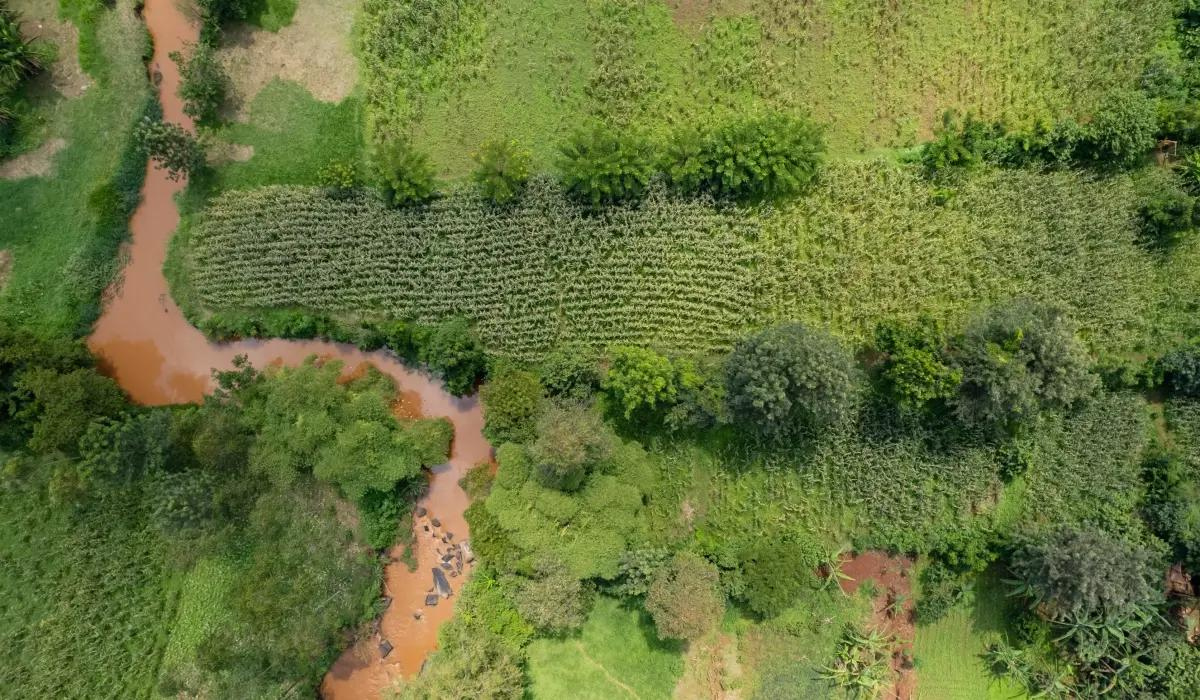
More fundamentally, carbon markets are designed to finance mitigation rather than adaptation. Most agricultural carbon projects generate revenues by reducing or removing greenhouse gas emissions through activities such as agroforestry, reforestation, and soil carbon sequestration. However, many of Kenya’s most pressing agricultural priorities relate to adaptation, including irrigation infrastructure, drought resilience, extension services, climate information systems, and value-chain development. These investments are critical for agricultural transformation but generally do not generate carbon credits and therefore cannot be financed through voluntary carbon markets alone.
Carbon markets should therefore be viewed as one component of a broader climate finance strategy rather than a standalone solution. Public investment, concessional finance, donor support, and private sector investment will continue to play a central role in financing agricultural development. Carbon markets can complement these resources by creating additional incentives for sustainable land management and mobilizing private climate finance that would otherwise not be available. As Kenya continues to strengthen its carbon market framework, policymakers should focus on improving transparency, strengthening project integrity, and ensuring that local communities receive a fair share of the benefits generated. Success should not be measured by the number of carbon credits produced, but by the extent to which carbon finance contributes to long-term development outcomes.
This blog has been authored by John Kiplagat, Research Assistant at the Institute of Public Finance
[LL1]Links