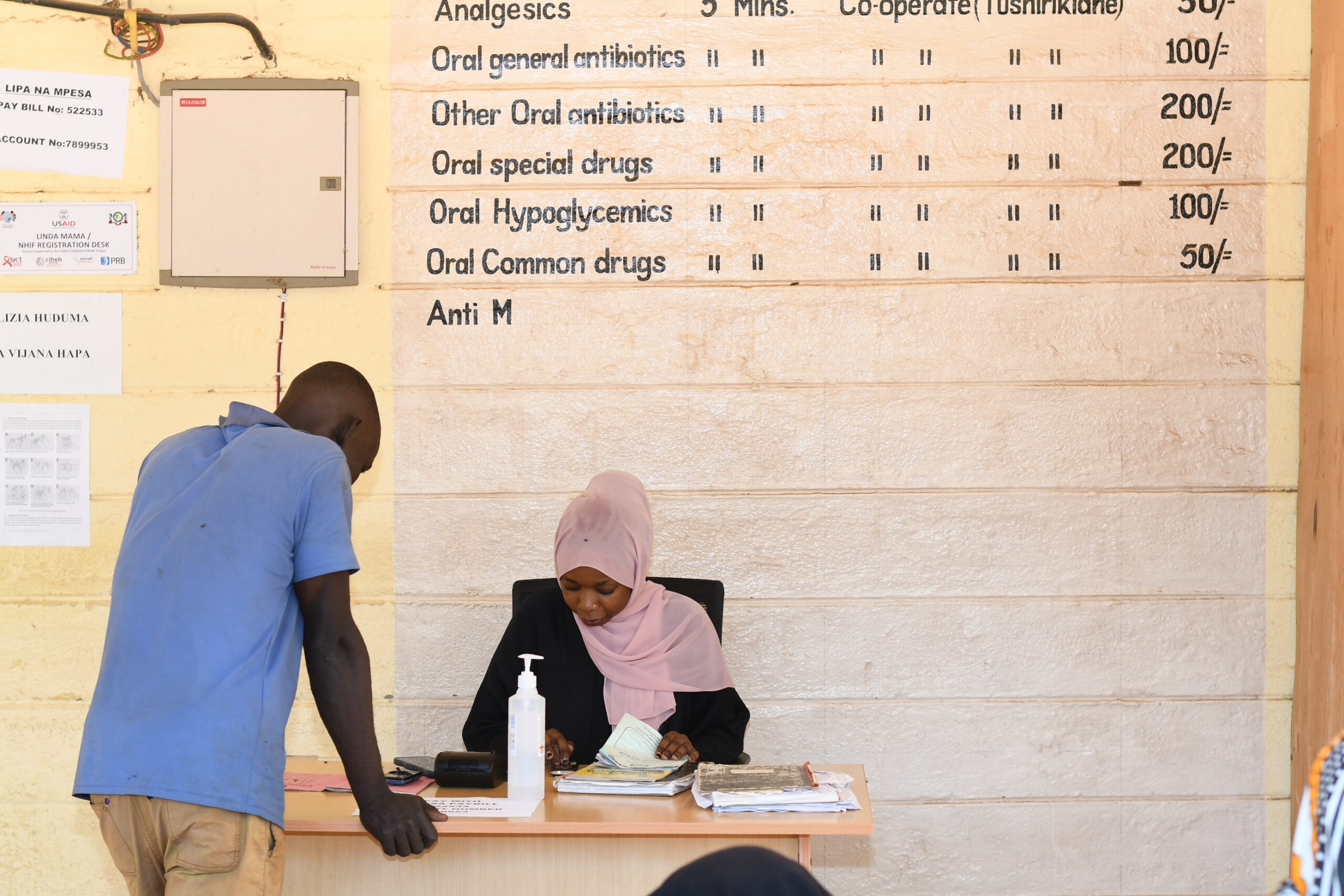
External health financing has long been a cornerstone of Kenya’s health sector, driving major improvements in outcomes across critical programs. In FY 2023/24, external support accounted for more than half of total spending in some programs, covering 68%, 85% and 71% of the total investments in HIV/AIDS, malaria and RMNCAH.[1] Yet, this lifeline has been steadily shrinking due to shifting donor priorities and Kenya’s reclassification as a lower middle-income country. Unfortunately, this reduction comes at a time when Kenya faces mounting fiscal pressures: rising debt repayments are squeezing public resources, while a growing population intensifies demand for health services. How can Kenya adapt? This blog explores how the government can mobilize additional domestic revenue through wealth and wealth-related taxes, as well as sin taxes, to navigate these shifts and safeguard health gains.
Kenya’s heavy reliance on a concentrated donor base, specifically the United States, has created a precarious vulnerability within the health system. This vulnerability was laid bare in 2025, when the US government scaled back foreign assistance, citing concerns of inefficiencies in resource use and a culture of dependency.[2][3] The immediate impacts included the reduction in availability of medical commodities such as family planning commodities, antiretrovirals (ARVs) and HIV test kits as well as widespread layoffs of donor funded health care personnel.
While some of the US funding may be partially recovered through the health cooperation framework, it still falls short of previous levels. USG support in the 5-year framework is expected to be an annual investment of USD 320 million, compared to an annual average of USD 410 million between 2020 and 2024.
Sustainability in health financing for Universal Health Coverage (UHC) hinges on Kenya’s ability to enhance domestic resource mobilization (DRM). Even if external financing were to be restored, it is unlikely to return to previous levels, and in any case, there are strong reasons to prioritize DRM. Domestic financing provides fiscal autonomy and greater flexibility to align resources with national health priorities compared to external funding, which is often shaped by agendas of external partners. Furthermore, external aid is often marred by unpredictability, including delayed disbursements and sudden termination which complicates planning and undermines efforts to build a resilient and responsive health system.
Tax systems should be designed to generate adequate and reliable revenues to support key services, such as health. Kenya has several options to strengthen revenue generation through taxation. One such option is wealth taxation. Currently, the top 10% of the population control 63% of the net personal wealth while the bottom 50% collectively hold only 4%. Despite this massive wealth inequality, taxation on wealth and wealth-derived income remains limited, with capital gains tax and rental income tax charged at lower rates compared to individual income tax, limiting their redistributive and revenue generating potential. Evidence suggests that a well-designed wealth tax could raise over USD 1 billion annually in Kenya.[4]
‘Sin taxes’ also present a strategic opportunity. These taxes, applied to harmful products such as tobacco and sugar-sweetened beverages, serve the dual purpose of discouraging unhealthy consumption while expanding fiscal space for health. The World Health Organization (WHO) recommends that tobacco taxes account for 75% of the retail price.[5] In Kenya, however, tobacco taxes currently make up about 32% of the retail price, below the continental average of 41%. In FY 2023/24, tobacco tax revenues were an estimated Ksh. 100 billion. Evidence from a scenario-based analysis suggests that a 50% annual increase in tobacco tax rates could more than double the tobacco tax revenue by 2029, while reducing smoking prevalence by 5%.[6] However, it is important to recognize the potential equity implications of such reforms as they may disproportionately affect lower-income households.
Overall, there remains much to be done in terms of domestic financing for health. A sustainably financed system is one that can guarantee consistent access to medical commodities, adequately staffed facilities and quality of care regardless of shifts in donor priorities. If Kenya is to achieve UHC and protect the health of its growing population, greater domestic revenue will be needed for investment in health.
References:
[1] Annual National Shadow Budget FY 2026/27. Link
[2] Reevaluating and Realigning United States Foreign Aid. Link
[3] America First Global Health Strategy. Link
[4] ‘Tax the Rich!’: Can Kenya Get Wealth Taxation Right? Link
[5] Kenya Falls Short of WHO Tobacco Tax Target, Faces Growing Public Health Crisis. Link
[6] Strengthening Tobacco Taxation in Kenya. Evolution, Challenges and Opportunities for Reform. Link
This blog has been authored by Gladys Wachira, Research Analyst at the Institute of Public Finance