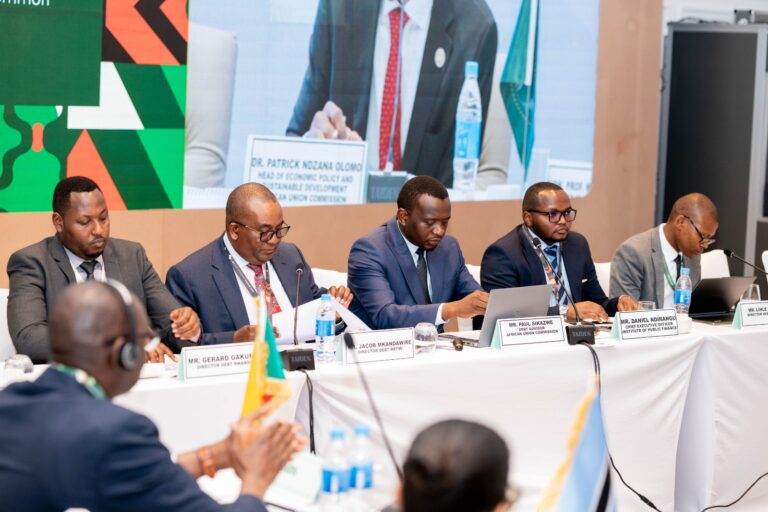
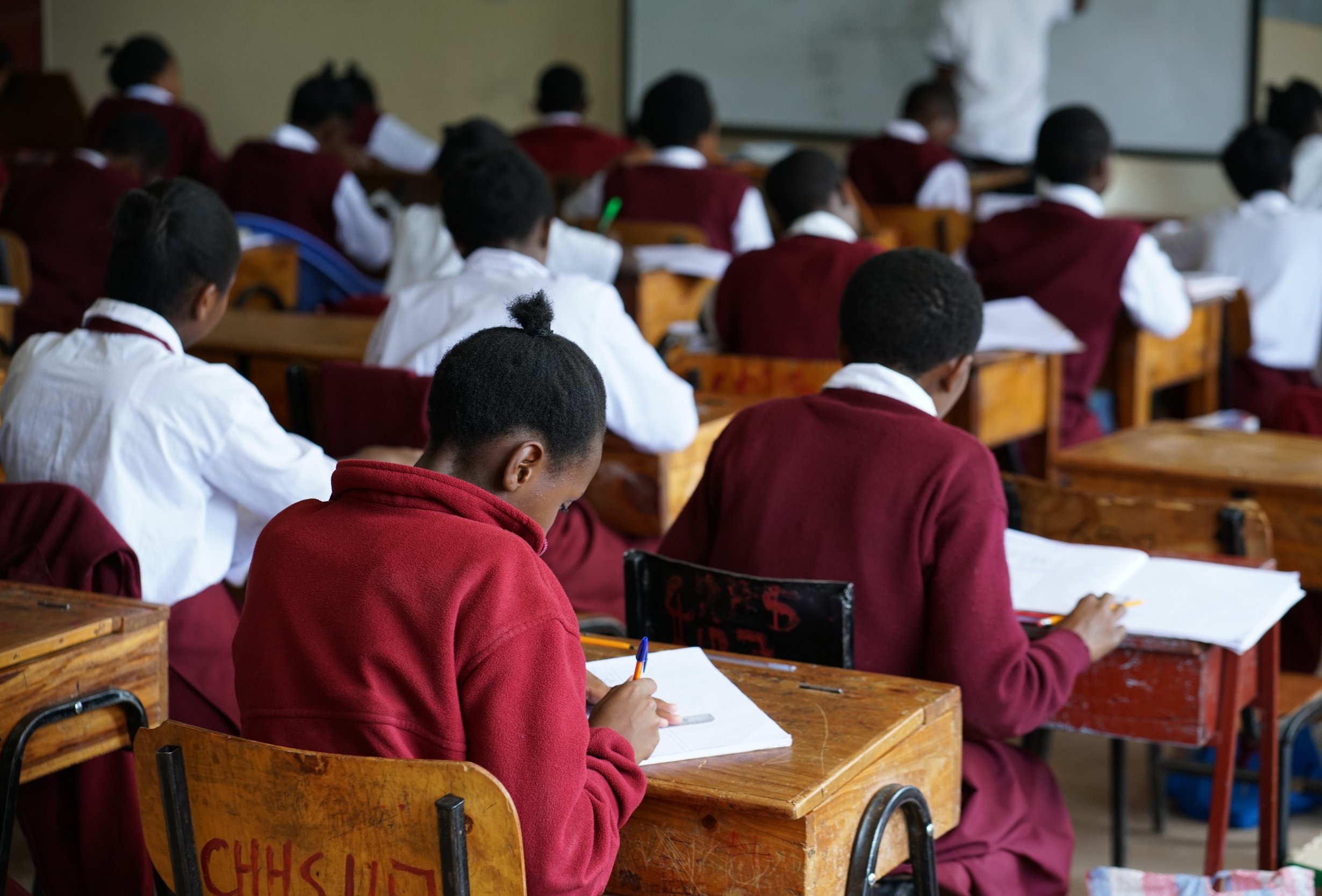
Kenya’s bursary system was established to improve access to education for learners from disadvantaged backgrounds, but its fragmented structure has increasingly limited its effectiveness. The Institute of Public Finance’s flagship Annual National Shadow Budget 2026/27 analyzed the effectiveness and utilization of Kenya’s education bursaries, which are fragmented and, if properly utilized, have the potential to deliver quality, free education.
Bursaries are currently distributed through multiple channels, including county governments, the National Government Constituencies Development Fund (NG-CDF) and the Presidential Secondary School Bursary (PSSB) reflecting a strong commitment to expanding educational access. However, despite relatively stable funding in some programmes, beneficiary numbers fluctuate significantly, delivery inefficiencies persist and substantial amounts of funding remain unutilized. Kenya could increase efficiency by merging bursary schemes into a single framework and gradually emphasizing capitation which would improve equity, efficiency, and progress toward universal free secondary education.
Kenya needs a unified bursary framework to eliminate duplication and ensure education resources are allocated more efficiently. Currently, limited coordination among schemes has resulted in overlaps, with 73% of sampled beneficiaries receiving support from multiple programs while others received none, and some awards exceeding school fees. Establishing a single application platform, uniform eligibility criteria, and integrated monitoring system would enhance coordination, reduce administrative costs, and ensure support reaches more learners.
Strengthening bursary targeting mechanisms is also essential to improve equity and prevent vulnerable learners from being excluded. Despite NG-CDF guidelines requiring transparent and needs-based beneficiary selection, bursary targeting remains weak and often fails to reach the most vulnerable learners. The Auditor-General’s 2026 Performance Audit, found that most constituencies allocated bursaries based on education level rather than socio-economic need, with only one of 23 sampled constituencies considering financial vulnerability. The audit also revealed widespread administrative weaknesses, including incomplete applications (62%), missing approval signatures (77%), and bursary awards issued without application forms. Digital application systems linked to socio-economic data could strengthen targeting and accountability by automatically verifying eligibility and ensuring only complete, approved applications are processed.
Improving governance and accountability systems would reduce leakages and strengthen confidence in education financing. Significant financial irregularities continue to weaken the effectiveness of bursary programs across various implementing bodies. Between FY FY2021/22 and FY2024/25 NG-CDF reported over KSh 2.1 billion in unsupported expenditures, while county governments noted KSh 886.7 million in unsupported disbursements in the FY 2023/24, accompanied by widespread financial inconsistencies. Constituency committees received very few acknowledgment receipts from learning institutions confirming the receipt of bursary funds, with nine constituencies of the 23 sampled recording compliance levels below 30%, which hinders assurance that resources reach the intended beneficiaries. Improving oversight through integrated reporting, mandatory school confirmations and regular independent audits would boost transparency and accountability throughout the financing process.
Kenya must also improve resource utilization to address the contradiction between unspent funds and unmet demand for educational support. County governments allocated KSh 11.2 billion to bursaries in FY2023/24 but did not fully use 11.6% of this, despite unmet demand for educational support. While PSSB allocations have remained relatively stable at Ksh 400 million yearly, beneficiary numbers have fluctuated significantly between 22,300 and 35,000 during the period 2020-24. In 2024/25, funding fell to Ksh 325 million while beneficiaries increased to 35,000, reducing per capita support. Conversely, in 2025/26 and 2026/27, there is a planned decline in beneficiaries to 16,100 each year with funding remaining at Ksh 400 million. Although higher per capita allocations can help beneficiaries study uninterrupted, excluding more than half of those previously supported is inequitable. Funding should be increased to ensure there is no tradeoff between the per capita benefit and the number of beneficiaries.
Capitation payments directly to schools would be a more effective pathway toward universal secondary education than bursaries. Unlike bursary programs, capitation exhibits high absorption (usually over 95% of its budget). There is also notable resource wastage in different bursary schemes which is not the case in capitation according to 2025 special auditor general report on capitation.In FY2025/26, funding for capitation fell KSh 46 billion short of the need, affecting the quality and accessibility of secondary education. In FY, Ksh 26.5 billion was issued out by different bursary schemes. Redirecting this amount to FY2025/26 capitation budget could reduce funding shortage from KSh 46 billion to KSh 20 billion. Interestingly, in FY 2026/27, capitation has a resource deficit of Ksh 5.2 billion, which means if all bursaries were to be reallocated to capitation there would be a surplus of over Ksh 20 billion and secondary education would be free.
Kenya’s fragmented bursary system requires a more integrated and accountable education financing framework to improve equity, efficiency, and access to quality secondary education. Managing several bursary programs alongside an underfunded capitation system is becoming less efficient and hampers efforts to ensure fair access to education. Kenya should move toward a unified framework that emphasizes capitation to optimize public expenditure, cut down on inefficiencies, and speed up progress towards universal, free, high-quality secondary education for everyone.
This blog was authored by Martin Kabaya, Research Analyst at the Institute of Public Finance